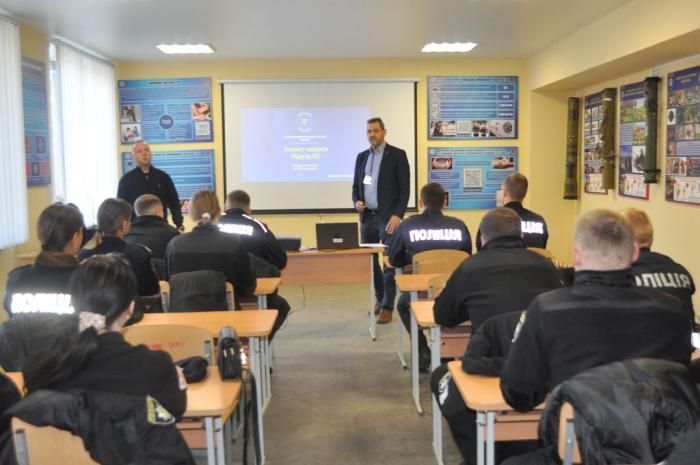
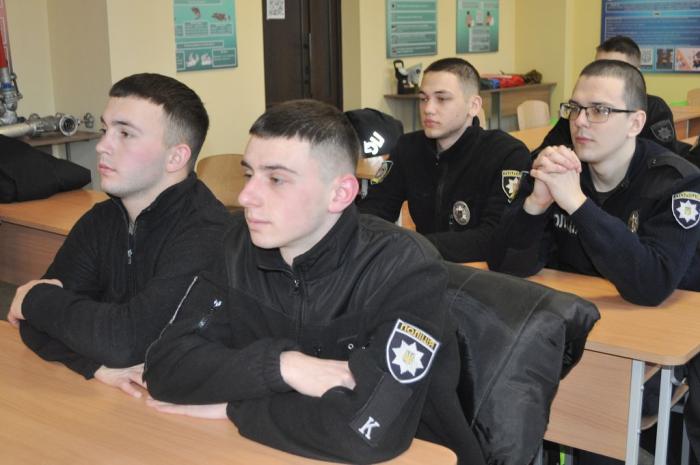
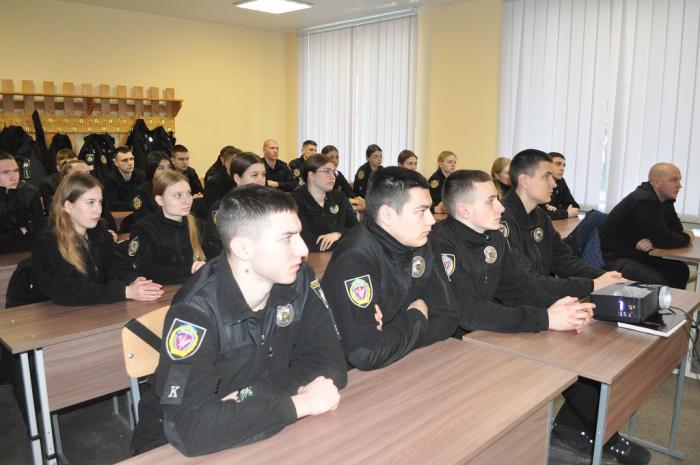
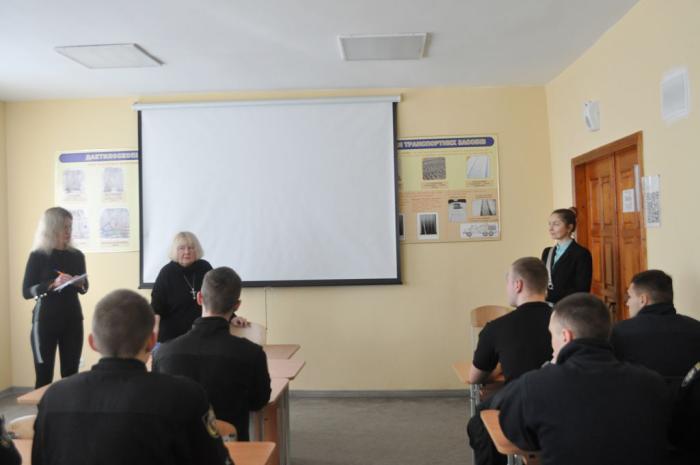
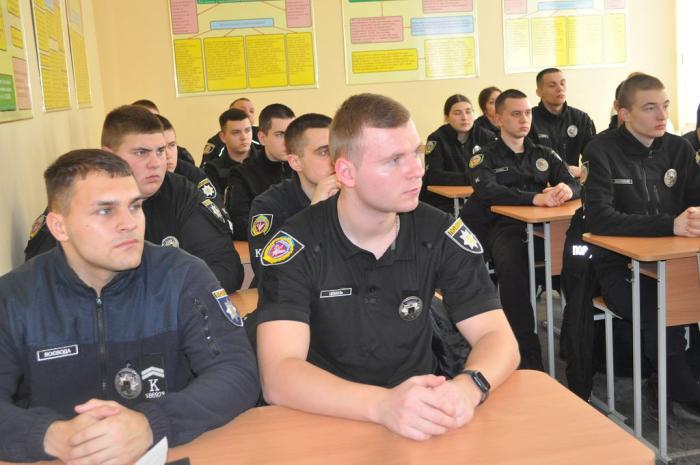
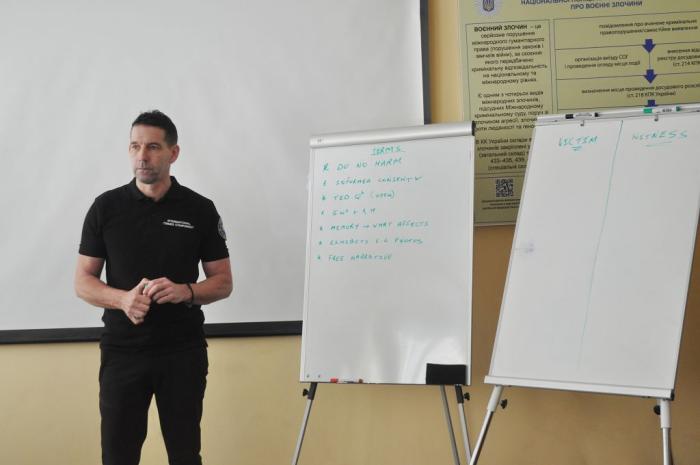
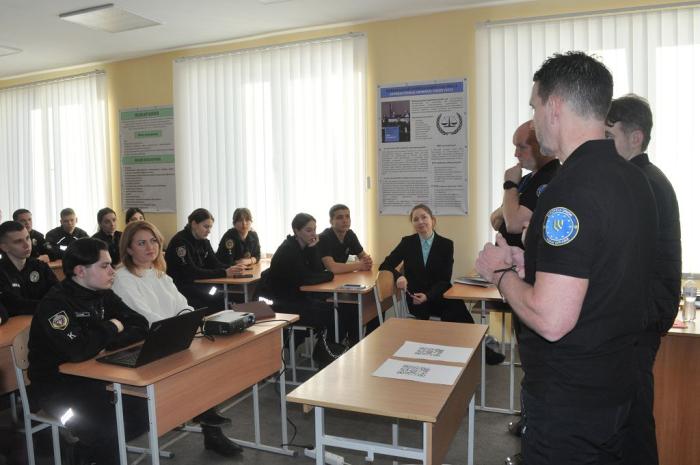
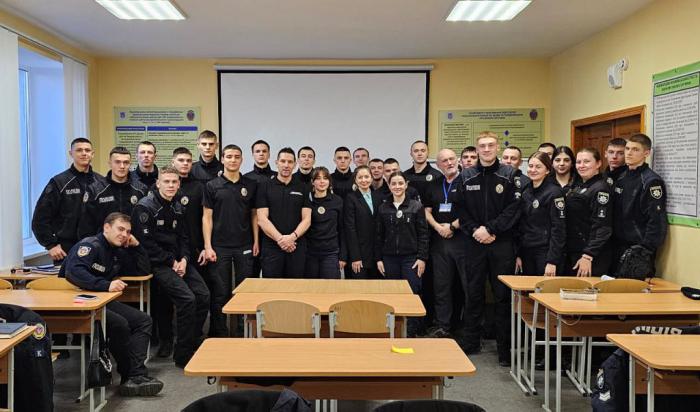
For the second day in a row, a comprehensive training course on war crimes investigation is being held at Kharkiv National University of Internal Affairs, organized with the support of the European Union Advisory Mission (EUAM) in Ukraine.
The session, dedicated to the issues of International Humanitarian Law, International Criminal Law and the European Court of Human Rights, was conducted by Senior Advisor on the Prosecution of International Crimes/Deputy Lead Coordinator of the Atrocity Crimes Advisory Group Claudio PALA. The types of crimes considered by the International Criminal Court, the features of their delimitation, and the characteristics of the subjects of their commission sparked a lively discussion between the trainer and the participants of the training in the aspect of collecting evidence of war crimes, crimes of aggression, genocide and crimes against humanity committed during martial law in Ukraine.
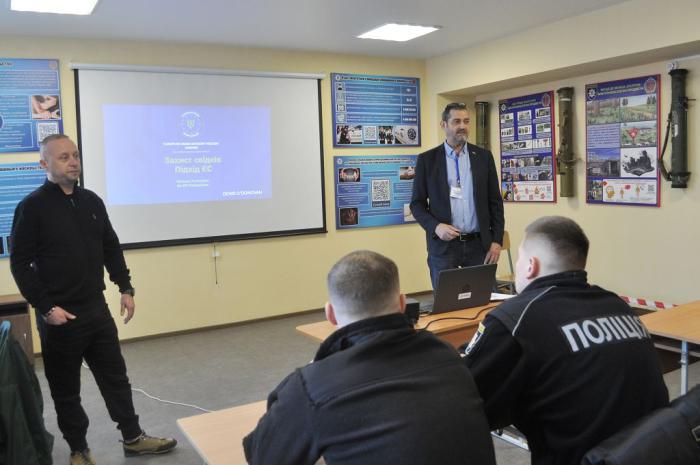
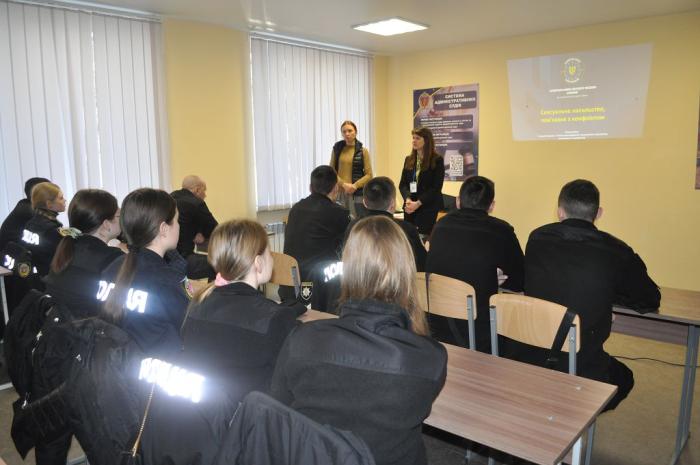
Senior Adviser on Witness Protection Denis O`DONOVAN spoke about the best practices of the European Union regarding the rights of victims and witnesses, focusing on the EU Directive on the Rights of Victims. Pauline BROSCH, Senior Advisor on Investigation of Conflict related Sexual Violence, spoke about the nature and forms of gender-based violence, the specifics of its investigation and evidence collection. The EUAM expert emphasized that CRSV, as a war crime, is a crime against humanity and a form of genocide, which has no statute of limitations for bringing perpetrators to justice under the Rome Statute.
The issue of working with vulnerable victims and witnesses was discussed by the Senior Advisor on Victims’ Rights Ola QUARNSTROM focusing on the importance of psychological support and a sensitive approach when working with vulnerable groups of the population. Senior Advisor on Legal Reform Satu SAPPAENEN conducted a training on mediation, explaining to the participants the essence, elements and significance of mediation in police work, cases in which it can be applied, conflict resolution techniques and their prevention, etc.
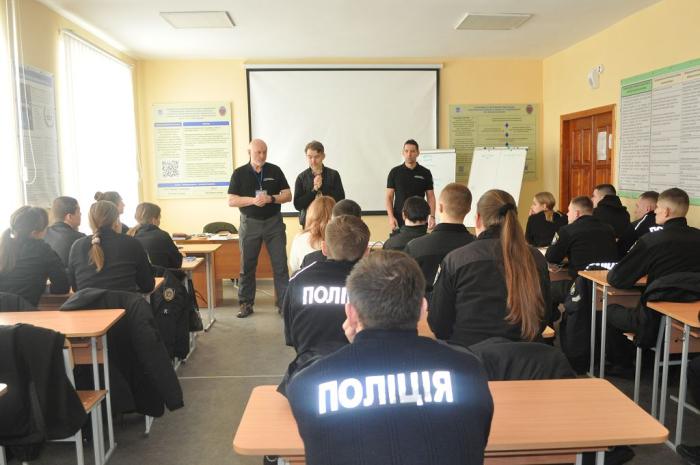
The practical session on interviewing victims and witnesses was conducted by Senior Advisors on Investigation of International Crimes Vincent HAUGHNEY and Gary CORRIGAN. At the beginning, they focused on the specifics of preparing for an interview, the key points on which police officers should focus, and the rules they should follow to conduct an interview effectively. The audience’s attention was focused on the PEACE cognitive interview method. After familiarizing themselves with the main components of the method, EUAM experts demonstrated a video of a war crime, divided the group into subgroups, and assigned each subgroup a task – to develop and present an interview program from the perspective of eyewitnesses and other witnesses. Based on the results of the presented reports, a discussion was held, during which the participants agreed that the quality and completeness of the information collected during the interview directly depends on its preparation and conduct.
Mission Security Officer Mike HEUVE and Mission Security Assistant Nicholas VERHART, together with the Associate Professor of the Department of Tactical and Special Training of the Educational and Research Institute No. 2 of KhNUIA Tykhin SHEVCHENKO, during intensive practical training in tactical training, worked with the cadets on the skills of ensuring security during search operations, inspections of buildings and premises, operations to pursue and detain suspects, etc.
The training in tactical medicine was conducted by independent military medical expert Volodymyr KUCHEROV. Those present mastered modern methods of providing first aid, which are especially relevant for law enforcement officers in martial law conditions. General Policing Advisors/Trainers Andrés LOPEZ and Andrés PEDRO PINTO conducted a training on stabilization measures and public order protection, during which they shared best practices and tools that help maintain law and order in crisis situations.
The criminal analysis class was conducted by Senior Advisors on Criminal Analysis Boštjan TRZAN and Abel ALVAREZ. The participants learned methods for detecting and analyzing criminal schemes. Under the guidance of OSINT expert Denis PEFTIEV, the cadets were introduced to methods for collecting and analyzing data needed for investigating war crimes, and examined case studies illustrating real-life situations involving the use of open sources of information in criminal proceedings.
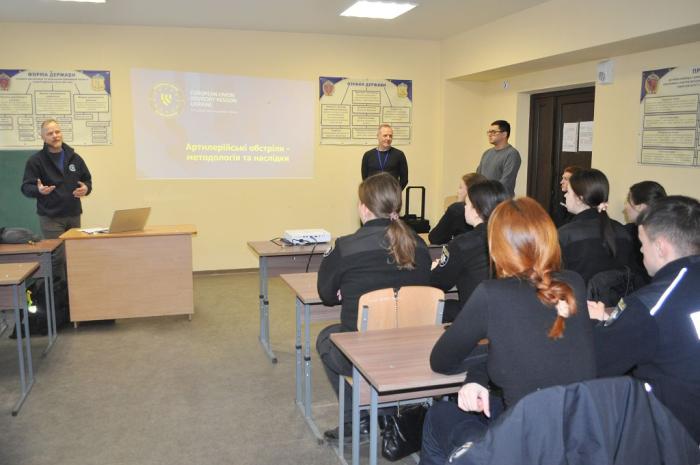
The issues of shelling, trajectories, and weapons were discussed by Senior Advisor on Forensics Marko MUHONEN and Senior Advisor on Investigation of International Crimes Sven SCHUETT. They also learned how to record the effects of shelling and how to use unmanned aerial vehicles (UAVs) to collect information and take samples for DNA testing. https://univd.edu.ua/uk/news/22312